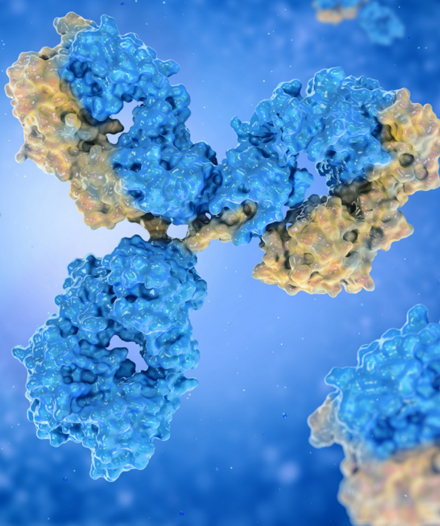
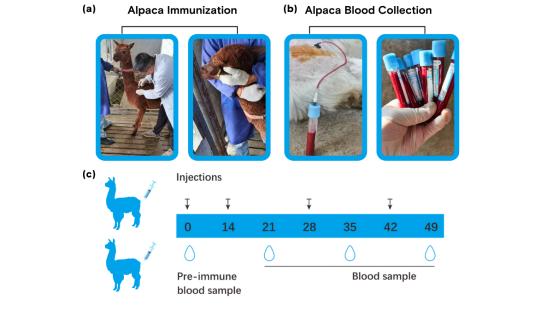
 Figure 1. Animal Immunization and Blood Collection
(a) Alpaca immunization procedure. (b) Blood collection from alpaca. (c) 49-day immunization timeline. Black arrows indicate injection days (Days 0, 14, 28, 42), and droplet icons represent blood collection (Days 0, 21, 35, 49). Day 0 serum is used as a negative control, while samples collected after immunization are used to measure immune response by titer testing.
Immunization Service Package
We offer end-to-end support for nanobody generation, from antigen design to immune cell collection. Our standard immunization workflow includes:
● Custom Immunization Strategy – Tailored to your target antigen
● Antigen Design & Production – Protein, peptide, VLP, or nucleic acid formats
● Camelid Immunization – Using naïve alpacas, llamas, or camels
● Serum Titer Monitoring – ELISA and FACS analysis of immune response
● PBMC Isolation & Storage – Peripheral blood mononuclear cells for downstream library construction
View More
To move from immunization to nanobody discovery, we construct high-diversity phage libraries from isolated PBMCs. Each library undergoes stringent validation to ensure quality and performance throughout downstream screening.
Library Construction Highlights
Our platform ensures high-quality phage libraries through rigorous optimization and validation.
1. Primer Optimization – Proprietary primers are designed to comprehensively cover all HcAb germline sequences.
2. Zero-Background Cloning – Background-free cloning technology enables 100% VHH insertion efficiency.
3. High Library Capacity – We guarantee a library size exceeding 1×10⁹ CFUs.
4. Clonal Uniqueness – Sanger sequencing of 48 random clones confirms 100% clonal uniqueness, with no sequence duplication.
5. Sequencing Depth Analysis – ORF correctness exceeds 90% based on sequencing of the sampled clones.
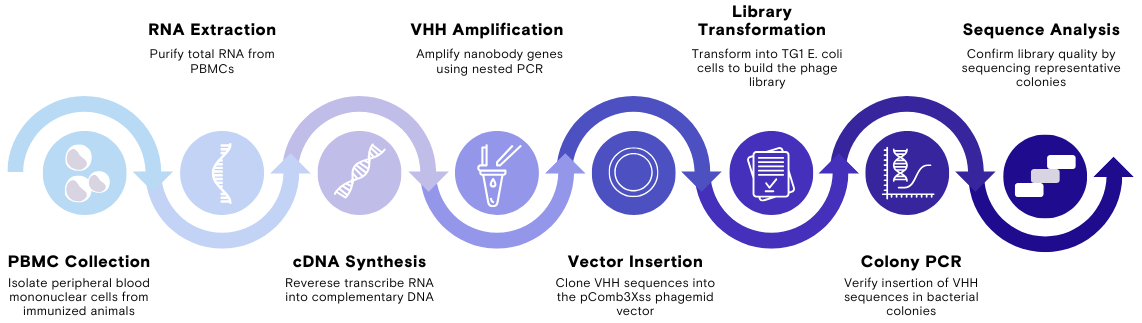
Phage Display Library Construction Workflow
Case Study: Improved Primer Design for Broader VHH Coverage
Standard VHH primers from literature often fail to capture the full diversity of camelid germline sequences. To overcome this limitation, we developed optimized primers that deliver higher PCR amplification efficiency and broader clone diversity.
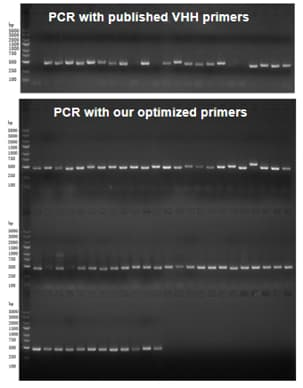
Figure 1. Agarose gel showing PCR products generated using published VHH primers (top) vs. RayBio’s optimized primers (bottom). Our primers produced more abundant and diverse bands, indicating better amplification and broader germline coverage.
Phage Display Screening Options
Depending on the type and format of your antigen, we offer two proven methods to screen phage libraries:
● Solid-Phase Screening
Antigens are coated directly onto a solid surface (e.g., plate wells). This method is widely used for its simplicity and compatibility with various antigens.
● Liquid-Phase Screening
Biotinylated antigens or antigen-expressing cells are incubated with phage in solution. Phage-antigen complexes are then captured with streptavidin-coated beads. This method better preserves antigen conformation and allows tighter control over concentration—ideal for delicate or complex targets.
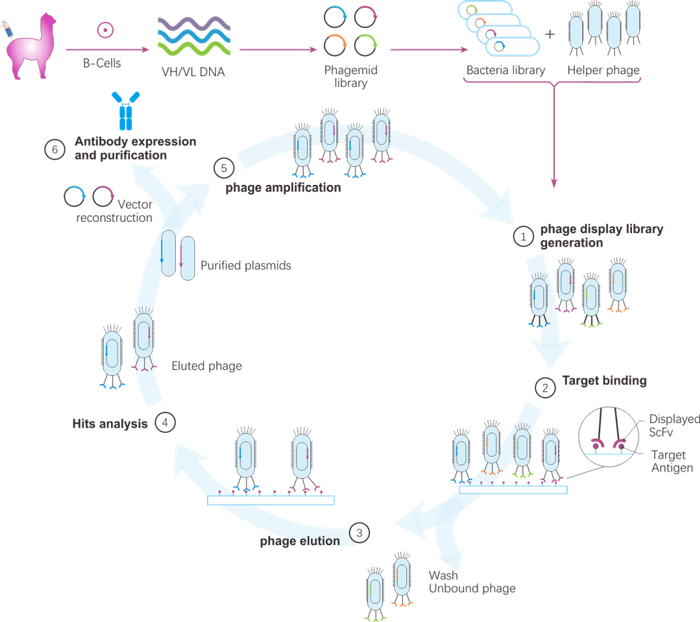
Figure 2. Workflow diagram of phage display screening. Shown here are iterative rounds of target binding, washing, elution, and phage amplification to enrich for high-affinity binders.
|
Service Component
|
Deliverables
|
Timeline
|
|
Library Construction
|
Bacterial library
Phage display library
|
4 weeks
|
|
Library Screening
|
Binder sequences
Project report
|
4 weeks
|
View More
Yeast Surface Display (YSD) is a widely used method for screening and selecting high-affinity antibody fragments and other binding proteins. The technique works by inserting the gene of interest into a yeast expression vector, allowing the encoded protein to be displayed on the yeast cell surface. This system enables rapid identification of candidates with desired binding properties, while preserving protein folding and functionality in a eukaryotic environment.
Library Construction Highlights:
Our platform ensures high-quality yeast libraries through rigorous optimization and validation:
● Primer Optimization – Proprietary primers provide broad coverage of HcAb germline sequences
● Zero-Background Cloning – 100% VHH insertion efficiency with background-free cloning
● Large Library Size – Guaranteed capacity exceeding 1×10⁸ CFUs
● Clonal Uniqueness – 100% uniqueness confirmed by Sanger sequencing of 48 random clones
● High ORF Accuracy – >90% correctness rate in open reading frames from validated clones
Yeast Surface Display Library Construction Workflow
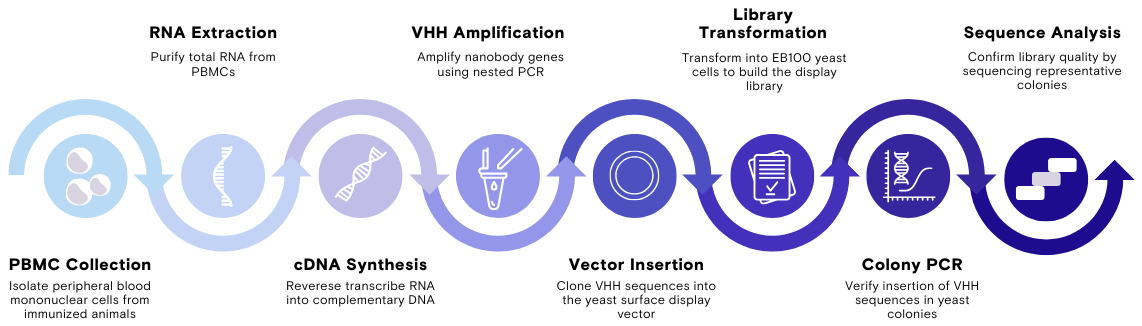
Yeast Display Screening Workflow
Following library construction, VHH candidates are screened using dual-selection:
● MACS (magnetic-activated cell sorting) for initial enrichment
● FACS (fluorescence-activated cell sorting) to isolate high-affinity binders
● Binders are validated via sequencing and recombinant expression
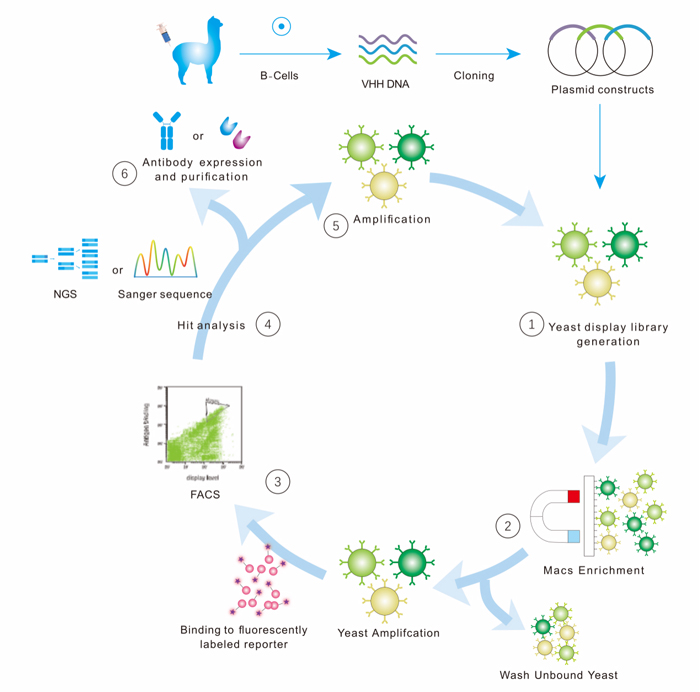
Figure 2. Yeast Surface Display Screening Workflow
Overview of the yeast display screening process, from library generation and enrichment to FACS-based selection and hit analysis.
|
Service Component
|
Deliverables
|
Timeline
|
|
Yeast Library Construction
|
Yeast expression library
Bacterial library
|
4 weeks
|
|
Yeast Library Screening
|
Sequences of binders
Project report
|
4 weeks
|
View More
|
Feature
|
Phage Display
|
Yeast Surface Display
|
|
Expression System
|
Prokaryotic
|
Eukaryotic
|
|
Display Level
|
One copy per phage
|
104–105 copies per yeast cell
|
|
Display Efficiency
|
≤10%
|
65%–80%
|
|
Antibody Formats
|
VHH, scFv, peptides, Fab
|
VHH, scFv, peptides, Fab, IgG
|
|
Library Diversity
|
Limited / Biased
|
Broad / Unbiased
|
|
False Positive Rate
|
High
|
Low
|
|
Panning Method
|
Solid or Liquid Phase
|
MACS and FACS
|
|
Compatible Antigen Types
|
Proteins, Cells
|
Proteins
|
|
Screening Throughput
|
<1,000 clones (Sanger)
|
>10,000 clones (NGS)
|
|
Representative Targets
|
BCMA, CLDN18.2, Trop2, GPRC5D, MSLN
|
BAFFR, PD-L1, IGF-1R, CD16a, HSA, TfR
|




 Yeast Display VHH Discovery Service
  Immunogen Design & Production
  Premade Library Screening
  Phage Display Nanobody Discovery Service
  Animal Immunization
  Yeast Display Peptide Library Screening
 Nanobody Discovery for ADC
  Nanobody Discovery for Membrane Targets
  Nanobody Discovery for Cell Therapy
  TCR-Mimic Nanobody Discovery

 Antibody Affinity Maturation Service
  Nanobody Humanization Service