.
Antibody-drug conjugates (ADCs) require highly selective targeting molecules capable of efficient tumor recognition and internalization. The quality of the targeting binder directly impacts payload delivery, therapeutic efficacy, and safety profiles.
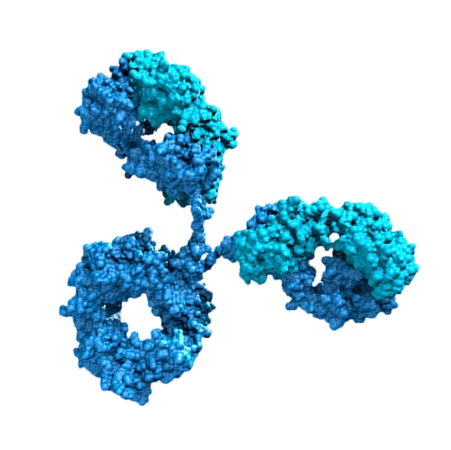
Compared with conventional antibodies, nanobodies (VHHs) offer several advantages for ADC development, including small molecular size, enhanced tissue penetration, excellent stability, and flexible engineering capabilities. Their compact structure also enables the development of multi-specific and next-generation targeted delivery systems.
Successful ADC-oriented binder discovery requires more than high-affinity binding alone. Candidate binders must recognize native cell-surface targets, exhibit favorable internalization properties, maintain tumor selectivity, and support downstream conjugation strategies.
To address these challenges, our discovery workflows integrate membrane protein-focused immunization strategies, cell-based screening, advanced display technologies and internalization assays to identify nanobody candidates optimized for targeted payload delivery applications.
Nanobodies possess several unique features that make them highly attractive for ADC and targeted delivery applications.
Small Molecular Size
Improves tumor penetration and enables access to sterically restricted epitopes.
Excellent Stability
Supports payload conjugation and improves manufacturability.
Flexible Engineering
Suitable for multi-specific ADCs, RDCs, and next-generation conjugate formats.
Native Cell-Surface Recognition
Particularly effective for recognizing conformationally sensitive membrane proteins.
ADC development requires binders with properties beyond target binding.
Internalization Capability
Efficient receptor-mediated internalization is critical for intracellular payload delivery.
Tumor Selectivity
High specificity minimizes off-target toxicity.
Native Cell-Surface Recognition
Binders must recognize physiologically relevant target conformations.
Conjugation Compatibility
Candidates should maintain functionality after payload conjugation.
Our discovery workflows are specifically optimized for ADC and targeted delivery applications, with a strong focus on membrane protein recognition, internalization behavior, and developability characteristics.
Membrane Protein-Focused Immunization
We support multiple antigen presentation strategies for difficult membrane protein targets, including:
Cell-based immunization
VLPs
LNP-mRNA
Membrane mimetic systems
These approaches help preserve native target conformations during discovery.
Internalization-Oriented Screening
Selection of binders recognizing epitopes associated with efficient receptor internalization.
Cell-Based Screening
Screening against native target-expressing cells helps enrich binders recognizing physiologically relevant epitopes. This strategy is particularly important for conformationally sensitive membrane proteins.
Multi-Parameter Candidate Evaluation
Candidate binders are evaluated based on:
Binding affinity
Specificity
Internalization behavior
Cross-species reactivity
Developability properties
This integrated strategy supports downstream ADC engineering and therapeutic development.
Option 1 — Immunization-Based Discovery
Camelid immunization → PBMC isolation → Library construction → ADC-oriented screening → Candidate validation
Recommended for:
Therapeutic ADC programs
Challenging membrane targets
High-affinity binder generation
Option 2 — Premade Library Screening
Premade library selection → Membrane protein screening/Cell-based screening → Candidate validation
Recommended for:
Rapid target validation
Early-stage exploratory studies
Fast identification of delivery ligands
Clients will receive:
ADC-oriented nanobody sequences
Expression-ready constructs (optional)
Functional validation data (optional)
Comprehensive project report
Optional downstream services
Option 1 — Immunization-Based Discovery
|
Stage |
Deliverables |
Timeline |
|
Immunization |
Serum titer report |
8 weeks |
|
Library construction |
Immune phage or yeast display library |
3–4 weeks |
|
Library screening |
Enriched binder sequences |
4-6 weeks |
|
Optional candidate production |
Purified VHH and expression-ready constructs |
2–3 weeks |
|
Optional validation |
Binding and functional assay data |
2–4 weeks |
Typical total timeline:
Approximately 15-18 weeks depending on project complexity and screening strategy.
Option 2 — Premade Library Screening
|
Stage |
Deliverables |
Timeline |
|
Library screening |
Enriched binder sequences |
4-6 weeks |
|
Optional candidate production |
Purified VHH and expression-ready constructs |
2–3 weeks |
|
Optional validation |
Internalization and functional assay data |
2–4 weeks |
Typical total timeline:
Approximately 4–11 weeks depending on project requirements.
Case Study