High-Quality, Naïve Animals
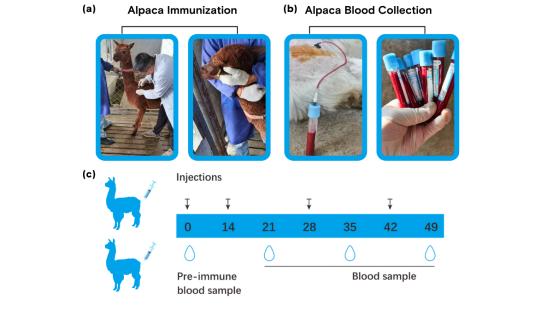
All animals are verified to have no prior exposure to target antigens, ensuring clean immune backgrounds and unbiased antibody generation.
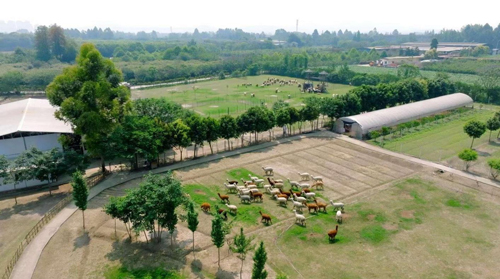
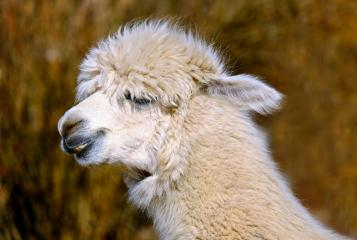
Figure 2. Our dedicated 40-acre farm houses high-quality alpacas and llamas imported from South America. With expert breeding and veterinary care, we ensure optimal animal health and project confidentiality.
Customized Immunogen Design
We tailor each antigen to your target and application, offering custom design and preparation of mRNA, VLPs, fusion proteins, and more. Every format is optimized to improve immunogenicity, preserve structural integrity, and ensure reliable downstream VHH discovery.
Proprietary Adjuvant Technology
Our camelid-optimized adjuvants enhance immune responses and boosts HcAb titer while maintaining antigen integrity and minimizing toxicity.
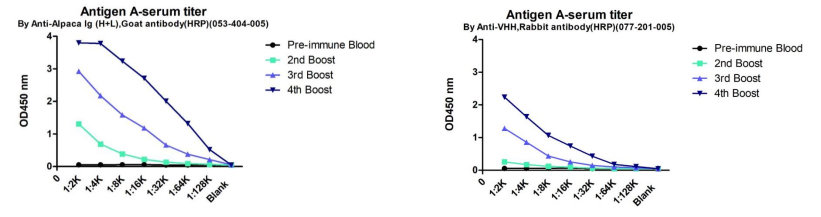
Figure 3. Serum titers following alpaca immunization with a camelid immune adjuvant and antigen mixture. The left panel shows total IgG titers after four immunizations; the right panel shows VHH titers. The X-axis represents serum dilution, and the Y-axis indicates OD values measured by ELISA.
Advanced Immune Monitoring
Integrated ELISA and FACS-based assays enable precise monitoring of antibody development.
Proprietary VHH Detection Antibody
Our in-house detection antibody allows sensitive and specific quantification of VHH titers without cross-reactivity.
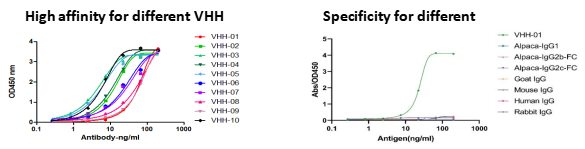
Figure 4. Left: Our AlpHcAb detection antibody demonstrates high affinity across diverse VHH sequences. Right: It shows strong specificity for VHHs without binding other alpaca or cross-species IgGs.
Seamless Integration with Discovery Platforms
Direct compatibility with phage display / yeast display library construction and screening workflows.



 Yeast Display VHH Discovery Service
  Immunogen Design & Production
  Premade Library Screening
  Phage Display Nanobody Discovery Service
  Animal Immunization
  Yeast Display Peptide Library Screening
 Nanobody Discovery for ADC
  Nanobody Discovery for Membrane Targets
  Nanobody Discovery for Cell Therapy
  TCR-Mimic Nanobody Discovery

 Antibody Affinity Maturation Service
  Nanobody Humanization Service