Recombinant Nanobody Expression Service can help researchers select an expression host, improve folding, and obtain stable nanobody material for screening and downstream assays. This guide explains how the host influences nanobody quality and gives a practical workflow for choosing, expressing, testing, and scaling a nanobody project with support from 阿帕克.
1. Understand how the expression host affects nanobody folding and stability
Folding depends on the intracellular environment
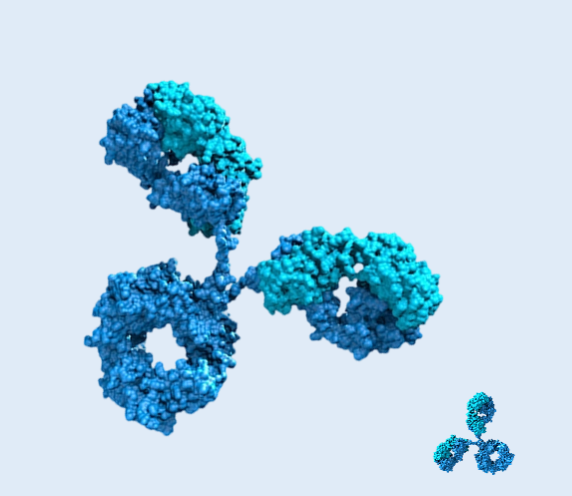
A nanobody is a compact antibody fragment, but its small size does not eliminate folding risks. The expression host determines the redox state, molecular chaperones, protease activity, secretion pathway, temperature tolerance, and post translational processing available during production.
- The cytoplasm of Escherichia coli is strongly reducing and may not support efficient disulfide bond formation without an engineered strain or a periplasmic secretion strategy.
- The bacterial periplasm provides a more suitable oxidizing environment and can improve disulfide bond formation and folding.
- Yeast secretion systems can support disulfide formation and extracellular folding, but glycosylation and proteolysis may affect the final product.
- Mammalian cells provide sophisticated folding and secretion machinery, although they usually require more time and cost more to operate.
- Cell free systems can provide rapid screening and controlled reaction conditions, but they may require optimization for soluble yield and correct disulfide pairing.
Stability is more than soluble expression
A high soluble yield does not necessarily indicate a stable nanobody. A product may appear soluble after purification but aggregate during storage, lose binding activity after freeze thaw cycles, or unfold at the temperature used in the final assay.
- Folding quality affects binding activity and conformational integrity.
- Host derived proteases can create clipped or truncated products.
- Incorrect disulfide bonds can reduce thermal stability and increase aggregation.
- Host specific impurities can interfere with binding, cell based assays, or animal studies.
- Expression conditions can influence oligomerization, residual host cell proteins, and endotoxin levels.
2. Choose the expression host according to the nanobody and project goal
Compare the main expression systems
| Expression host |
Typical strengths |
Common limitations |
Best use case |
| Escherichia coli cytoplasm |
Fast growth, low cost, simple scale up |
Inclusion bodies, weak cytoplasmic disulfide formation, endotoxin risk |
Stable nanobodies that tolerate bacterial expression and rapid screening |
| Escherichia coli periplasm |
Improved disulfide formation and secretion |
Lower volumetric yield and possible periplasmic proteolysis |
Nanobodies requiring correct disulfide bonds and soluble folding |
| Yeast |
Secretion, scalable fermentation, eukaryotic folding support |
Glycosylation, protease activity, strain dependent product quality |
Secreted nanobodies and projects requiring larger culture volumes |
| Mammalian cells |
Advanced secretion and folding machinery |
High cost, slower production, more complex process control |
Research requiring a highly controlled eukaryotic expression environment |
| Cell free expression |
Fast design screening and controlled conditions |
Higher reagent cost and variable yield |
Early construct comparison and rapid feasibility studies |
Match the host to the purchasing requirement
Purchasing groups usually need more than a host name. They need a predictable route to usable material, a clear cost estimate, realistic delivery timing, and evidence that the product will perform in the intended assay.
- For early candidate screening, prioritize speed, parallel expression, and low material cost.
- For biophysical characterization, prioritize monodispersity, low aggregation, and reproducible purification.
- For cell based assays, prioritize low endotoxin, low host cell protein contamination, and consistent batch quality.
- For animal studies, prioritize documented identity, purity, sterility requirements, endotoxin control, and batch traceability.
- For scale up, confirm that the selected host and purification process can support the required quantity.
3. Follow a step by step workflow for host selection and nanobody expression
First step: define the product and assay requirements
Before selecting a host, record the intended use of the nanobody. Define the required quantity, purity, concentration, formulation, storage temperature, binding assay, and delivery deadline.
- Write down the target antigen and expected binding format.
- Estimate the minimum quantity needed for discovery, validation, and repeat experiments.
- Define the acceptable purity and endotoxin limits.
- Specify whether the nanobody must be monomeric, labeled, biotinylated, multivalent, or fused to another domain.
- List the temperature, pH, salt, and freeze thaw conditions used in the final application.
Second step: review the nanobody sequence
Sequence analysis can identify features that influence host selection. Review the framework region, complementarity determining regions, cysteine pattern, hydrophobic patches, predicted isoelectric point, and potential protease sensitive sites.
- Confirm the open reading frame and remove unwanted cloning residues.
- Check whether the native or engineered cysteine pattern is compatible with the selected host.
- Identify long hydrophobic segments that may increase aggregation.
- Assess unusual charge distribution and possible solubility risks.
- Review whether an affinity tag or secretion signal is required.
Third step: select two or more host and construct combinations
Do not rely on a single host when the nanobody sequence is untested. A practical screening design may compare a bacterial periplasmic construct with a bacterial soluble construct, or compare bacterial expression with yeast secretion.
- Use a periplasmic bacterial construct when disulfide formation is a primary concern.
- Use a soluble cytoplasmic bacterial construct when the sequence is known to fold efficiently in bacteria.
- Use yeast when secretion and larger culture volume are important.
- Use mammalian expression when the project requires a controlled eukaryotic environment or complex fusion format.
Fourth step: perform a small scale expression screen
Run a small scale screen before committing to a large culture. Compare induction or secretion conditions, temperature, culture duration, construct design, and host strain. The goal is to identify the condition that provides the best balance of soluble yield and product quality.
- Transform or introduce the construct into the selected host.
- Confirm positive clones by colony screening and sequence verification.
- Test several expression temperatures and induction conditions where applicable.
- Separate soluble and insoluble fractions or analyze secreted culture media.
- Compare total expression, soluble expression, and apparent degradation.
- Select the best conditions for purification and stability testing.
Fifth step: purify and confirm product identity
Purification should remove host impurities while preserving the native folded state. Affinity purification is useful for initial recovery, but a polishing step may be required for aggregation control and high purity applications.
- Clarify the lysate or culture supernatant under controlled conditions.
- Capture the tagged nanobody using the appropriate affinity resin.
- Remove the affinity tag if the application requires tag free material.
- Use size exclusion chromatography or another polishing method to separate monomer from aggregates.
- Confirm molecular weight by mass spectrometry or an appropriate electrophoretic method.
- Measure concentration using a method compatible with the buffer and protein format.
Sixth step: evaluate folding, binding, and stability
Evaluate the material using orthogonal tests. A single gel image cannot prove correct folding or long term stability.
- Check purity and degradation by SDS PAGE or capillary electrophoresis.
- Check monomer percentage and aggregation by size exclusion chromatography.
- Measure thermal unfolding using differential scanning fluorimetry or differential scanning calorimetry.
- Measure colloidal stability using dynamic light scattering when appropriate.
- Confirm antigen binding by ELISA, surface plasmon resonance, biolayer interferometry, or a validated cell based assay.
- Run accelerated storage and freeze thaw studies using the intended formulation.
- Compare activity before and after stress to determine whether the host and process preserved functional folding.
Seventh step: scale up only after quality confirmation
Scale up the selected host only after confirming that the small scale product meets the acceptance criteria. Recheck yield, purity, monomer content, binding activity, endotoxin, and storage stability at the larger scale.
4. Prepare the required tools and decision criteria
Laboratory tools for expression and purification
- Verified nanobody DNA sequence and expression vector.
- Competent host cells or a validated cell culture system.
- Culture media, selection reagents, induction reagents, and secretion supplements where required.
- Temperature controlled incubator or shaker.
- Centrifuge, lysis equipment, filtration devices, and chromatography system.
- Affinity resin and size exclusion chromatography resin.
- Protein concentration measurement equipment.
Analytical tools for folding and stability
- SDS PAGE or capillary electrophoresis for purity and degradation.
- Size exclusion chromatography for monomer and aggregate analysis.
- Mass spectrometry for identity and molecular weight confirmation.
- ELISA, surface plasmon resonance, or biolayer interferometry for binding evaluation.
- Differential scanning fluorimetry or differential scanning calorimetry for thermal stability.
- Dynamic light scattering for particle size and aggregation tendency.
- Endotoxin testing equipment for sensitive cell based or in vivo applications.
Commercial information to request before purchasing
- Recommended expression host and reason for the recommendation.
- Expected yield range rather than a single best case value.
- Purity, monomer percentage, endotoxin level, and buffer composition.
- Identity and binding activity data.
- Storage conditions, shelf life, and freeze thaw guidance.
- Options for tag removal, labeling, biotinylation, multimerization, and scale up.
- Replacement, revision, and technical support terms if the first expression attempt fails.
5. Diagnose folding and stability problems by symptom
Low soluble expression or inclusion body formation
Low soluble expression may result from rapid synthesis, hydrophobic sequence regions, unsuitable temperature, excessive induction, or insufficient folding support.
- Lower the expression temperature and reduce induction strength.
- Test a periplasmic secretion signal or an alternative bacterial strain.
- Compare a fusion partner that improves solubility with the unmodified construct.
- Evaluate whether the protein can be refolded from inclusion bodies without losing binding activity.
- Compare the bacterial result with a yeast or mammalian expression system.
Good yield but weak binding
A high yield with weak binding may indicate misfolding, incorrect disulfide pairing, proteolytic damage, an unsuitable tag position, or a problem with the antigen assay.
- Confirm sequence integrity after expression and purification.
- Compare binding of fresh and stored material.
- Analyze monomer content and aggregation.
- Test whether tag removal restores activity.
- Use an orthogonal binding assay to exclude assay specific artifacts.
Aggregation during storage
Aggregation can be caused by concentration, pH, ionic strength, exposure to air liquid interfaces, repeated freeze thaw cycles, or a sequence level hydrophobic patch.
- Screen several buffers near the intended application conditions.
- Test stabilizing excipients that are compatible with the downstream assay.
- Reduce concentration during storage if the application permits.
- Use single use aliquots and avoid repeated freeze thaw cycles.
- Compare monomer recovery after short term and accelerated storage.
6. Avoid common mistakes that reduce nanobody quality
Common technical mistakes
- Choosing a host only because it provides the highest total expression.
- Assuming that a clear band on SDS PAGE proves correct folding.
- Skipping sequence verification after cloning.
- Using a cytoplasmic bacterial system without considering disulfide bond formation.
- Ignoring proteolysis in secreted yeast or periplasmic samples.
- Scaling up before confirming monomer content and binding activity.
- Comparing hosts under different purification and storage conditions.
- Using one stability test as the only release criterion.
Common purchasing mistakes
- Requesting a quantity without defining the final assay and concentration.
- Accepting a purity percentage without asking how purity was measured.
- Failing to request endotoxin information for cell based or animal applications.
- Not confirming whether the quoted material is monomeric and biologically active.
- Ignoring lead time for construct design, expression screening, purification, and quality testing.
- Choosing the lowest initial price without comparing repeat experiment risk and failure cost.
How to prevent these mistakes
Use a written acceptance specification before placing an order. The specification should include identity, purity, monomer percentage, concentration, buffer, endotoxin level, binding activity, storage condition, and the tests required for release. Ask the supplier to explain how the selected host addresses the sequence specific folding risks.
7. Use a practical decision checklist before ordering
Host selection checklist
- Is the nanobody expected to require correct disulfide bond formation?
- Has the sequence been expressed successfully in the proposed host before?
- Does the intended application require low endotoxin or a specific eukaryotic environment?
- Is the priority speed, yield, stability, assay performance, or scale up?
- Will the final product be used at high concentration or under stressful storage conditions?
- Are parallel host screens needed to reduce development risk?
Product acceptance checklist
- Sequence and molecular identity confirmed.
- Purity and degradation profile documented.
- Monomer and aggregate levels measured.
- Binding activity confirmed in a relevant assay.
- Thermal and storage stability evaluated.
- Endotoxin level reported when relevant.
- Final formulation and storage instructions provided.
When to use a Recombinant Nanobody Expression Service
A Recombinant Nanobody Expression Service is useful when the sequence is untested, the project requires rapid comparison of expression hosts, the internal laboratory lacks chromatography or biophysical analysis equipment, or the cost of a failed scale up is high. 阿帕克 can help organize construct review, host selection, expression screening, purification, folding evaluation, stability testing, and delivery according to the intended application.
When users search for How Expression Host Affects Nanobody Folding and Stability, they are usually looking for a reliable decision process rather than a simple host comparison. The best approach is to connect host biology with sequence risk, product specifications, orthogonal quality testing, and total project cost.
For projects that require predictable quality and technical support, contact NBbiolab about a Recombinant Nanobody Expression Service and provide the nanobody sequence, target application, required quantity, purity target, assay format, and delivery schedule.



 Yeast Display VHH Discovery Service
 Immunogen Design & Production
 Premade Library Screening
 Phage Display Nanobody Discovery Service
 Animal Immunization
 Yeast Display Peptide Library Screening

 Nanobody Discovery for ADC
 Nanobody Discovery for Membrane Targets
 Nanobody Discovery for Cell Therapy
 TCR-Mimic Nanobody Discovery


 Antibody Affinity Maturation Service
 Nanobody Humanization Service