Recombinant Nanobody Expression Service selection is often more complicated than comparing expression yield alone. When purchasing teams evaluate E. coli and mammalian expression, they usually want to know whether the nanobody will fold correctly, remain stable during storage, meet purity and endotoxin requirements, and support later research, diagnostics, or therapeutic development. 阿帕克 provides recombinant nanobody development and expression support for projects that require a clear decision between bacterial and mammalian systems.
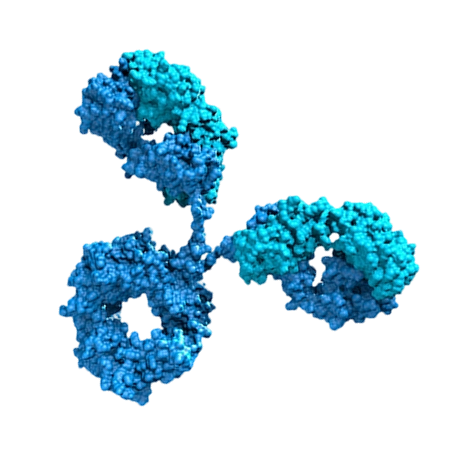
E. coli and mammalian expression solve different nanobody production problems
The search intent focuses on more than protein yield
Across common search results and technical discussions about E. coli versus mammalian expression, the recurring topics are expression level, soluble folding, disulfide bond formation, post translational modification, endotoxin, production cost, scale up, and application fit. These topics reflect the main purchasing pain points rather than simple academic curiosity.
- Researchers need enough soluble nanobody for screening and binding experiments.
- Procurement teams need predictable delivery time, batch consistency, and transparent cost.
- Diagnostic developers need low endotoxin and stable performance across repeated batches.
- Preclinical teams need a production route that can be transferred to larger scale manufacturing.
- Developers must avoid paying for high expression of misfolded or inactive protein.
Therefore, the most useful comparison is not which system is universally better, but which system produces the right quality of nanobody for a defined application.
Core parameter comparison between E. coli and mammalian expression
The main technical differences should be evaluated side by side
| Parameter | E. coli expression | Mammalian expression | Procurement meaning |
|---|
| Typical production speed | Fast, often suitable for early screening and iterative optimization | Slower because cell expansion and secretion optimization require more time | Choose E. coli when project speed is the primary constraint |
| Production cost | Usually lower for laboratory scale production | Usually higher because of cell culture media, equipment, and process control | Compare cost per usable milligram rather than cost per culture volume |
| Expression yield | Can be high, but depends strongly on construct, signal peptide, strain, and induction conditions | Often moderate, with better suitability for secreted and complex formats | High total expression is not useful if the soluble or active fraction is low |
| Disulfide bond formation | Possible in the periplasm or engineered cytoplasm, but may require optimization | Generally favorable in the secretory pathway | Important for nanobodies with folding sensitive frameworks or engineered formats |
| Soluble protein ratio | Variable; inclusion bodies may occur at high expression levels | Often favorable for secreted constructs, although aggregation can still occur | Ask for soluble yield and monomer ratio, not only total yield |
| Post translational modification | Limited compared with mammalian cells | Supports mammalian cellular processing and more complex engineered formats | Relevant when the nanobody is fused to Fc, albumin binding domains, or other modified proteins |
| Endotoxin risk | Present because E. coli is a Gram negative bacterium and requires removal steps | Generally lower bacterial endotoxin risk, but other impurities still require control | Critical for cell assays, animal studies, and sensitive diagnostic applications |
| Scale up | Well established and economical for many research and industrial processes | Scalable, but requires tighter control of cell culture conditions and contamination risk | Consider future manufacturing transfer before selecting a short term expression route |
| Batch consistency | Can be highly consistent after strain and process optimization | Can be consistent, but cell line age, culture status, and process control affect results | Request a documented release standard and batch testing plan |
| Best suited applications | Screening, binding studies, structural work, early assay development, and routine research | Complex fusions, secretion dependent formats, advanced preclinical studies, and manufacturing oriented projects | Application requirements should determine the platform |
Usable yield is more important than nominal yield
For a purchasing decision, usable yield should include the amount of correctly folded, soluble, purified, monomeric, and functionally active nanobody. An E. coli culture may produce a large amount of recombinant protein, but refolding, aggregation, or endotoxin removal can reduce the final usable amount. Mammalian expression may show a lower volumetric yield while reducing downstream recovery losses.
- Total expression yield: the amount of target protein detected after expression.
- Soluble yield: the amount remaining in the soluble fraction.
- Purified yield: the amount recovered after purification.
- Monomer yield: the amount that remains primarily monomeric after purification.
- Active yield: the amount that retains expected antigen binding and functional activity.
E. coli expression offers speed, cost efficiency, and process flexibility
Why E. coli is often selected for early stage nanobody work
E. coli is usually the first option when the nanobody sequence is well behaved, the required quantity is moderate, and the project requires rapid iteration. The platform is familiar to most protein laboratories, and fermentation and purification workflows are widely available.
- Fast cloning and expression testing can shorten the design cycle.
- Culture media and equipment are generally less expensive.
- Multiple strains and induction conditions can be screened efficiently.
- Periplasmic expression can support disulfide bond formation and simplify clarification.
- High cell density fermentation can support larger production volumes.
- The platform is suitable for comparing many nanobody candidates in parallel.
The main E. coli risks appear during folding and downstream processing
The most common practical problem is that high expression does not always produce high quality nanobody. Strong induction can overload the folding machinery and cause inclusion body formation. Some constructs also show low periplasmic recovery, proteolysis, or aggregation after purification.
- Inclusion bodies may require refolding, increasing labor and reducing recovery.
- Endotoxin removal may add cost and may reduce final yield.
- Aggregation can increase after concentration, freezing, or repeated thawing.
- Sequence specific behavior is difficult to predict from expression level alone.
- Some engineered fusions are less suitable for bacterial secretion.
In practical use, E. coli tends to perform well when the construct is optimized for soluble expression and the purification process includes appropriate endotoxin and aggregation controls. It becomes less attractive when the project requires complex secretion dependent formats or strict manufacturing continuity.
Mammalian expression improves compatibility with complex and secretion dependent formats
Why mammalian cells are preferred for advanced constructs
Mammalian cells provide a secretory environment that can be useful for nanobodies fused with Fc regions, albumin binding domains, multimerization modules, or other proteins that benefit from mammalian processing. The system can also be preferred when the final molecule is intended for applications that require a more manufacturing relevant process.
- Secreted expression can simplify recovery from the culture medium.
- The cellular secretory pathway generally supports disulfide bond formation.
- Complex fusion proteins may show better folding and assembly.
- The approach can be closer to later mammalian bioprocess development.
- It may reduce the bacterial endotoxin concern associated with E. coli workflows.
The main mammalian limitations are time, cost, and process complexity
Mammalian expression is not automatically superior for every nanobody. Cell culture often requires more expensive media, specialized equipment, contamination control, and longer development time. A simple nanobody that expresses efficiently in E. coli may not gain enough benefit to justify a mammalian process.
- Transient expression can be expensive for repeated or large scale production.
- Culture expansion and optimization may delay delivery.
- Lower volumetric productivity can affect cost per milligram.
- Cell health and culture conditions can influence batch performance.
- More process parameters must be monitored during scale up.
In actual project planning, mammalian expression is most valuable when improved folding, secretion, format compatibility, or downstream development value outweighs the higher production cost.
Practical experience shows that stability and recovery determine project success
Storage stability replaces battery life as the relevant performance measure
Battery life is not applicable to recombinant nanobody expression because the product is a biological reagent rather than an electronic device. The comparable practical performance indicators are storage stability, freeze thaw tolerance, aggregation tendency, activity retention, and batch reproducibility.
- Short term stability: whether the purified nanobody remains soluble and active during routine laboratory handling.
- Long term stability: whether activity and monomer content are retained under the planned storage condition.
- Freeze thaw stability: whether repeated use causes precipitation or loss of binding.
- Concentration stability: whether the nanobody remains monomeric at the concentration required by the assay.
- Operational stability: whether different batches perform consistently in the same protocol.
Observed use patterns differ between the two systems
For routine screening, E. coli derived nanobodies often provide a practical combination of fast delivery, adequate activity, and lower cost. However, the final user experience depends heavily on purification quality. A low endotoxin, low aggregate preparation can perform better than a higher yield preparation with poor recovery or inconsistent activity.
Mammalian derived nanobodies may offer a smoother experience when the construct is secreted efficiently and the culture process is controlled. Users often value the cleaner fit for complex formats, but they must accept longer lead times and higher production costs. The relevant question is whether the improved format compatibility prevents later redesign.
Quality tests should be agreed before production begins
- Confirm identity using an appropriate analytical method.
- Measure purity with a defined acceptance threshold.
- Evaluate monomer and aggregate content using size based analysis.
- Measure endotoxin when the material will be used in cell or animal experiments.
- Confirm antigen binding with a method aligned with the intended application.
- Assess concentration, recovery, and appearance after the planned storage condition.
- Record batch number, formulation, storage temperature, and freeze thaw history.
The advantages and disadvantages can be summarized by project objective
E. coli advantages and disadvantages
- Advantages: fast production, lower cost, flexible strain screening, familiar workflows, and strong suitability for parallel candidate evaluation.
- Disadvantages: endotoxin removal, possible inclusion bodies, variable soluble expression, aggregation risk, and limited suitability for some complex fusions.
Mammalian advantages and disadvantages
- Advantages: favorable secretion environment, strong compatibility with complex formats, useful folding support, and a process that may align better with later mammalian manufacturing.
- Disadvantages: higher cost, longer development time, more complex culture control, and potentially lower productivity for simple nanobody constructs.
The best choice depends on the cost of failure
If the project is exploratory, the cost of waiting is high, and the construct is simple, E. coli is often the rational starting point. If a failed expression route would cause major redesign, delay a preclinical study, or compromise a complex fusion format, mammalian expression may provide better overall value even when the initial quotation is higher.
Different purchasing groups should use different selection criteria
Academic laboratories and early discovery teams
These groups usually prioritize speed, candidate throughput, and budget. E. coli expression is often appropriate for initial screening, binding verification, structural analysis, and assay feasibility work.
- Recommended starting point: E. coli expression with soluble expression screening.
- Important release tests: purity, concentration, monomer content, and binding activity.
- When to reconsider: repeated insolubility, severe aggregation, or a complex fusion design.
Diagnostic developers
Diagnostic groups need repeatability, low background, stable storage, and compatibility with the final assay. E. coli can work well when endotoxin and impurities are carefully controlled, while mammalian expression may be considered for complex formats or secretion dependent constructs.
- Compare batch to batch activity rather than one time yield.
- Define stability testing under actual assay storage conditions.
- Request a clear impurity and endotoxin control strategy.
Preclinical and therapeutic development teams
These groups should evaluate the future development path, not only the immediate research batch. Mammalian expression may be more suitable for Fc fusions and other complex molecules, while E. coli may remain useful for early candidate ranking and noncomplex formats.
- Assess manufacturability and scale up before finalizing the platform.
- Set stricter requirements for identity, purity, aggregates, endotoxin, and activity.
- Compare the cost of platform change against the cost of late stage process redesign.
Procurement and project management teams
Purchasing decisions should include delivery risk, technical communication, rework probability, and post delivery support. The lowest quoted price may not be the lowest total project cost if the material requires repeated optimization.
- Ask whether expression screening is included before scale production.
- Confirm the expected yield range and the definition of final yield.
- Clarify purification, endotoxin removal, formulation, and stability testing.
- Confirm whether failed expression or low recovery triggers process optimization.
- Request a realistic timeline for sequence review, small scale testing, production, and quality control.
A decision workflow can reduce expression risk before production
Use a staged selection process instead of choosing by platform reputation
- Define the nanobody format, application, target quantity, and required delivery date.
- Review sequence features that may affect solubility, secretion, aggregation, and stability.
- Start with E. coli when the construct is simple and rapid screening is important.
- Consider mammalian expression when the construct contains complex fusions or shows repeated bacterial folding problems.
- Compare soluble yield, active yield, monomer ratio, endotoxin, and total project cost.
- Run a small scale feasibility test before committing to a large production batch.
- Use the actual application assay as the final decision point.
Questions to ask a Recombinant Nanobody Expression Service provider
- Which expression system is recommended for this specific sequence and why?
- Will both soluble expression and functional activity be evaluated?
- What purification method and formulation will be used?
- What are the expected purity, monomer, endotoxin, and activity specifications?
- How will aggregation or low recovery be handled?
- Can the process be transferred from small scale to larger production?
- What information will be included in the final quality report?
Final recommendation for choosing E. coli or mammalian expression
Choose E. coli when speed and economical screening come first
E. coli is generally the practical first choice for simple recombinant nanobodies used in screening, binding assays, structural studies, and early diagnostic development. It offers a strong balance of speed, cost, and process flexibility when soluble expression and endotoxin control are achievable.
Choose mammalian cells when format compatibility and development continuity matter most
Mammalian expression is more suitable for complex fusions, secretion dependent constructs, difficult folding behavior, and projects that place greater value on development continuity than on the lowest initial price. Its higher cost can be justified when it reduces redesign and downstream risk.
Let application data determine the final platform
There is no universal winner between E. coli and mammalian expression for recombinant nanobodies. The correct decision should be based on active yield, stability, aggregation, endotoxin, batch consistency, delivery schedule, and future scale requirements. 阿帕克 can support sequence evaluation, expression system selection, purification, quality testing, and Recombinant Nanobody Expression Service planning so that the chosen platform matches the real needs of the purchasing and development team.



 Yeast Display VHH Discovery Service
 Immunogen Design & Production
 Premade Library Screening
 Phage Display Nanobody Discovery Service
 Animal Immunization
 Yeast Display Peptide Library Screening

 Nanobody Discovery for ADC
 Nanobody Discovery for Membrane Targets
 Nanobody Discovery for Cell Therapy
 TCR-Mimic Nanobody Discovery


 Antibody Affinity Maturation Service
 Nanobody Humanization Service