Structure-Guided Affinity Maturation
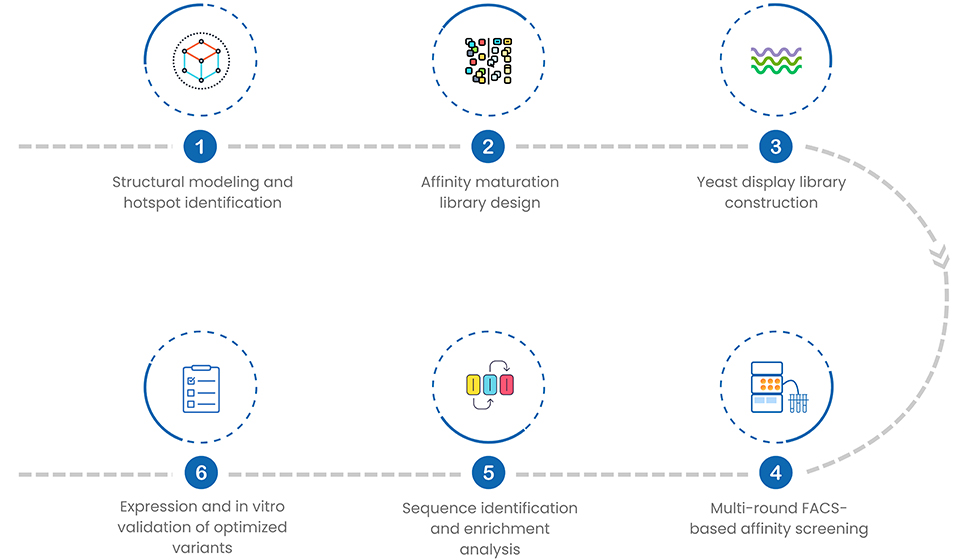
Our proprietary computer modeling software is used to design targeted libraries for affinity optimization. As shown in Figure 1, this modeling predicts key interaction sites between the antibody and antigen. The resulting variant libraries are screened using our yeast surface display platform, yielding affinity-enhanced clones (Figures 2).
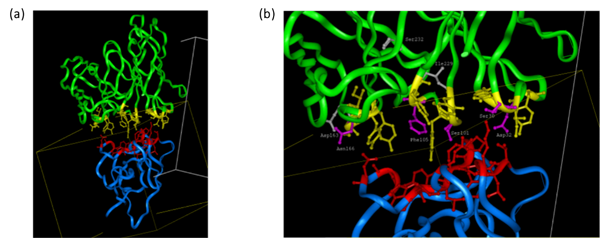
Figure 1. Computer Modeling of Antibody–Antigen Interaction.
Key binding residues at the interface were predicted through 3D structural modeling. Green: A yeast display affinity maturation library was generated based on computational hotspot analysis and screened through multiple rounds of FACS sorting.
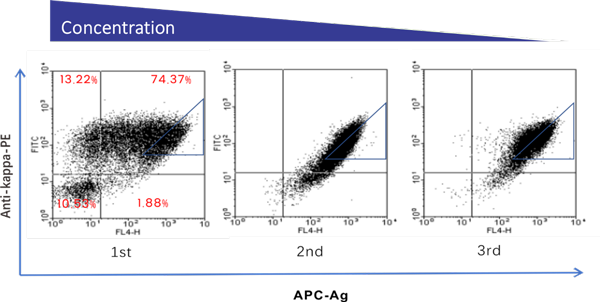
Figure 2. Structure-Guided Antibody Optimization.
A yeast display affinity maturation library was generated based on computational hotspot analysis and screened through multiple rounds of FACS sorting.
In vitro Validation
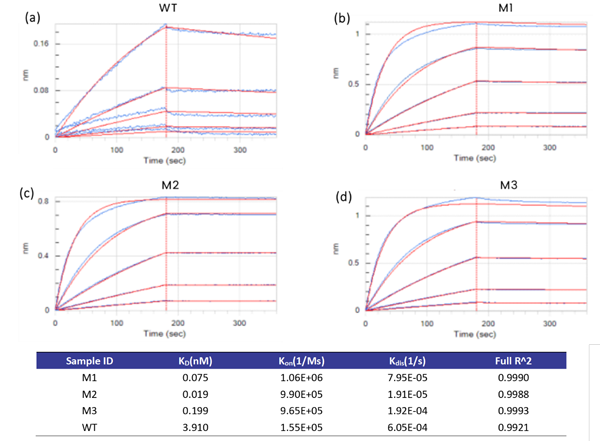
Figure 3. Binding Affinity Improvement of Mutants Compared to Wild Type.
Selected mutants achieved approximately 20- to 200-fold affinity improvement compared with the parental antibody.



 Yeast Display VHH Discovery Service
  Immunogen Design & Production
  Premade Library Screening
  Phage Display Nanobody Discovery Service
  Animal Immunization
  Yeast Display Peptide Library Screening
 Nanobody Discovery for ADC
  Nanobody Discovery for Membrane Targets
  Nanobody Discovery for Cell Therapy
  TCR-Mimic Nanobody Discovery

 Antibody Affinity Maturation Service
  Nanobody Humanization Service