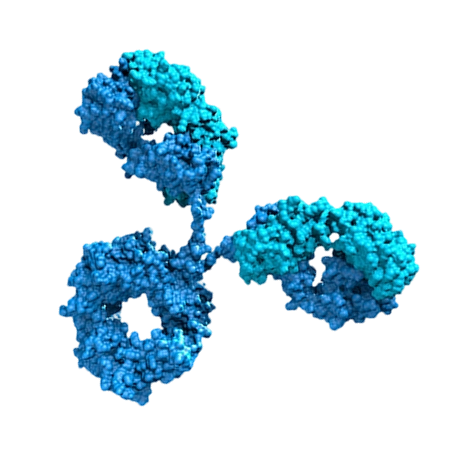
Recombinant Protein vs Peptide Immunogens for Nanobody Discovery
Oct.30,2026
Share:
Nanobody projects often slow down before screening begins because the immunogen is unstable, poorly folded, or unable to expose the target epitope. An Immunogen Preparation Service for Nanobody Discovery helps researchers move from target selection to a validated immunization material. The service may include recombinant protein expression, peptide design, conjugation, purification, quality control, and delivery. It is useful when teams need a nanobody immunogen preparation service, recombinant protein immunogen preparation for nanobody discovery, or peptide immunogen design for nanobody discovery.
Recombinant Protein vs Peptide Immunogens for Nanobody Discovery: the correct format depends on the target structure and epitope.
What Is an Immunogen Preparation Service for Nanobody Discovery?
An immunogen preparation service converts a biological target into a material that can stimulate an immune response in an immunized camelid, such as an alpaca or llama. The material may be a purified recombinant protein, a protein domain, a stabilized membrane protein, a synthetic peptide, or a peptide-protein conjugate.
In nanobody discovery, the immunogen is not the final nanobody. It is the antigen used to generate B-cell and antibody responses. After immunization, researchers typically isolate lymphocytes, amplify VHH genes, build an immune library, and screen the library by methods such as phage display, yeast display, ELISA, biolayer interferometry, or surface plasmon resonance.
Key industry terms
Antigen: A molecule recognized by an antibody or nanobody.
Immunogen: An antigen that can trigger an adaptive immune response.
Epitope: The specific surface region recognized by an antibody. It may be linear or conformational.
VHH: The approximately 12–15 kDa antigen-binding domain found in camelid heavy-chain antibodies.
Conformational epitope: A binding site formed by the three-dimensional folding of a protein.
Carrier protein: A larger protein, often KLH or BSA, linked to a short peptide to improve immune recognition.
Nanobodies are attractive because their single-domain format is small, commonly about 15 kDa, and can bind recessed or sterically restricted sites that may be difficult for conventional antibodies to access. These properties are described in the review by Muyldermans in Annual Review of Biochemistry, which reports that camelid VHH domains combine antibody-like specificity with a compact single-domain structure.
A screening campaign can produce many binders but still fail to deliver a useful nanobody if the immunogen does not represent the intended target. For example, a denatured protein may generate binders that recognize unfolded material but not the native protein on a cell surface. A peptide may be chemically pure but lack the three-dimensional structure needed to recreate the target epitope.
Good immunogen design should answer four questions:
What form does the target take in the final assay or product?
Which epitope or functional site must the nanobody recognize?
Can the target be produced with the correct folding, modification, and oligomeric state?
How will the immunogen be separated from tags, carriers, aggregates, and host-cell contaminants?
These decisions affect immune response quality, library diversity, screening specificity, and the chance of obtaining a binder with the desired function. A preparation service is therefore more than a protein-ordering step. It is a design and quality-control process that connects molecular biology with downstream nanobody performance.
Recombinant Protein vs Peptide Immunogens for Nanobody Discovery
Recombinant protein immunogens
Recombinant proteins are usually preferred when the target is a soluble enzyme, receptor domain, viral antigen, cytokine, or other structured protein. The production system may include Escherichia coli, yeast, insect cells, or mammalian cells. The choice depends on disulfide bonds, glycosylation, membrane association, folding complexity, and required biological activity.
Common quality checks include SDS-PAGE, size-exclusion chromatography, mass spectrometry, endotoxin testing, and binding confirmation. For proteins used in animal immunization, researchers often set project-specific acceptance criteria such as a defined purity percentage, a low aggregate fraction, and a confirmed concentration. Exact limits should be agreed before production because a suitable threshold differs between targets and immunization protocols.
Peptide immunogens
Peptides are useful when the target epitope is known to be linear, when the full-length protein is difficult to express, or when researchers want to focus the immune response on a short sequence. Peptide synthesis can provide precise control over sequence, terminal modifications, and conjugation sites.
A short peptide alone may be too small to produce a strong immune response. It is therefore often linked to a carrier protein through a cysteine or another designed coupling residue. KLH is commonly used for immunization, while BSA may be used in a separate assay to reduce the chance that screening detects antibodies against the carrier protein.
Peptides have an important limitation: they may not reproduce a conformational epitope. If the final nanobody must bind the folded protein, a peptide-based campaign should be supported by a secondary screen using the native or recombinant target.
How to choose the correct format
Target situation
Recommended starting format
Main risk to control
Soluble, well-folded protein
Purified recombinant protein
Aggregation or incorrect folding
Known linear epitope
Conjugated synthetic peptide
Carrier-focused or non-native binding
Membrane receptor or transporter
Stabilized domain, detergent complex, liposome, or cell-based format
Loss of native conformation
Glycoprotein or disulfide-rich target
Eukaryotic expression system or validated domain construct
Missing post-translational modifications
Small molecule or hapten
Hapten-carrier conjugate
Incorrect linker orientation
Step-by-Step Immunogen Preparation Workflow
1. Define the target and final use
The project begins with the target name, sequence, species, isoform, domain boundaries, intended application, and final assay. Researchers should state whether the nanobody must recognize purified protein, native protein on cells, a disease-associated mutant, a viral particle, or a specific catalytic state.
2. Map the desired epitope
Bioinformatic analysis can identify exposed regions, conserved residues, transmembrane segments, signal peptides, glycosylation sites, and possible off-target homologs. If a known ligand-binding or catalytic site is important, the immunogen should preserve that region. For peptide projects, a typical design review considers hydrophilicity, surface exposure, uniqueness, length, aggregation tendency, and the position of the conjugation residue.
3. Select the expression or synthesis route
Simple bacterial expression can reduce production time and cost for many soluble domains. Mammalian or insect expression may be more appropriate for complex folding, disulfide formation, or glycosylated targets. A synthetic peptide route is often practical when the selected sequence is short and chemically accessible.
4. Produce and purify the immunogen
Recombinant proteins may be purified using affinity chromatography followed by ion-exchange or size-exclusion chromatography. A cleavable affinity tag can be removed if the tag could dominate the immune response or interfere with the final assay. Peptides are commonly purified by reverse-phase high-performance liquid chromatography and confirmed by mass spectrometry before carrier conjugation.
5. Verify identity, purity, and structure
A useful quality-control package may include:
SDS-PAGE or capillary electrophoresis for apparent molecular size.
HPLC or size-exclusion chromatography for purity and aggregation.
LC-MS or MALDI-TOF for molecular mass confirmation.
Endotoxin testing when the material is intended for animal use.
Western blot, ELISA, or biophysical binding testing to confirm target recognition.
Protein concentration measured by a validated assay such as A280, BCA, or Bradford, with awareness of assay-specific interference.
6. Confirm functional presentation
Identity is not enough. A recombinant protein may have the correct mass but still be misfolded. When possible, compare the prepared immunogen with a positive control in a ligand-binding assay, enzymatic assay, conformational antibody assay, or cell-based binding test. For membrane targets, a cell-based assay may better represent the native antigen than a denatured western blot.
7. Package and document the material
The final documentation should record the construct or peptide sequence, expression system, purification method, buffer, concentration, purity result, aggregate result, endotoxin result, storage temperature, freeze-thaw guidance, and recommended immunization amount. Clear records reduce uncertainty when later screening results are interpreted.
Applications of Immunogen Preparation Service for Nanobody Discovery
Diagnostics and biomarker detection
Nanobodies can be developed against cancer markers, inflammatory proteins, infectious disease antigens, and environmental contaminants. Small size can support dense immobilization on assay surfaces, while thermal and chemical stability may help in lateral-flow, ELISA, biosensor, and imaging formats. The immunogen should match the sample form, such as a soluble biomarker in serum or a membrane marker on intact cells.
Therapeutic research
For therapeutic discovery, the immunogen may be designed to preserve a receptor-binding site, enzyme active site, or protein–protein interaction surface. Functional screening is essential because a nanobody that binds strongly may not block, activate, or internalize the target. Recombinant proteins, stabilized domains, and cell-based immunogens can be combined to increase the chance of obtaining functional binders.
Cell biology and imaging
Nanobodies are used as affinity reagents, fluorescent tags, crystallography chaperones, and intracellular research tools. For imaging, the immunogen should preserve the target state found in fixed or living cells. For intracellular applications, additional tests may be needed to evaluate expression, solubility, and target engagement inside the chosen cell type.
Structural biology and drug discovery
Nanobodies can stabilize particular conformations of receptors, enzymes, or transporters. This may support structural studies by reducing conformational flexibility. In these projects, immunogen preparation often focuses on a defined state, such as ligand-bound, inactive, active, or mutant protein, rather than only the total protein sequence.
Advantages of Using a Professional Immunogen Preparation Service
Target-specific planning: The service links epitope selection to the final nanobody assay.
Access to multiple production systems: The target can be matched to bacterial, yeast, insect, or mammalian expression.
Reduced rework: Early checks for solubility, aggregation, and binding can identify problems before immunization.
Better traceability: Sequence records, batch data, and analytical results support reproducibility.
Flexible immunogen formats: Projects can use proteins, domains, peptides, conjugates, nanoparticles, or cell-based materials.
Support for difficult targets: Membrane proteins, unstable domains, and post-translationally modified targets receive a format-specific strategy.
The main value is risk control. If a preparation fails a defined purity, identity, or functional-presentation criterion, it can be redesigned before valuable animal immunization and library construction resources are used.
How to Evaluate an Immunogen Preparation Provider
Before placing an order, ask the provider for a written project plan. It should explain the target construct, production host, purification steps, expected yield, quality tests, storage conditions, and replacement policy if the material does not meet the agreed specification.
Useful questions include:
Can the provider recommend a protein, peptide, or combined immunogen strategy?
Will the provider test aggregation instead of reporting purity alone?
Can affinity tags be removed and verified?
How will endotoxin be measured and reported?
Can the provider confirm native or functional target recognition?
Will the final batch include a certificate of analysis?
Can the same target be supplied later for screening and validation?
For a peptide project, also confirm peptide purity, observed molecular mass, carrier protein, linker chemistry, conjugation ratio if available, and the assay antigen used for screening. Using a different carrier in the screening assay can help distinguish target-peptide recognition from anti-carrier binding.
Common Problems and Practical Solutions
Low protein yield
Low yield may result from codon usage, toxic expression, incorrect folding, proteolysis, or poor solubility. Possible solutions include changing the host, lowering induction temperature, expressing a smaller domain, adding a solubility tag, or moving to a eukaryotic system.
Protein aggregation
Aggregation can reduce the amount of usable immunogen and present non-native surfaces to the immune system. Size-exclusion chromatography, buffer screening, lower concentration, controlled temperature, and removal of unstable regions may improve the preparation.
Strong binding to tags or carriers
Anti-tag or anti-carrier binders can appear during immunization. Tag removal, carrier switching, competitive blocking, and screening against the untagged native target can reduce this risk.
Peptide does not reproduce the native epitope
This is common when the target site depends on tertiary structure, disulfide bonds, glycosylation, or neighboring residues. A recombinant domain or cell-based immunogen may be added, and positive clones should be tested against the full-length native target.
Good ELISA signal but weak cell binding
ELISA may detect a linear or partially unfolded epitope. Cell-based flow cytometry, immunofluorescence, or live-cell binding assays can reveal whether the nanobody recognizes the target in its intended biological context.
Scientific References and Industry Guidance
This review explains VHH structure, stability, and applications.
This article reviews nanobody development and therapeutic uses.
These resources describe general antigen, antibody, purification, and quality-control principles.
This provides broader guidance for safe handling of biological materials and laboratory workflows.
These references provide scientific context. The exact immunogen specification should still be based on the target, host, assay, and intended nanobody application.
FAQ About Immunogen Preparation Service for Nanobody Discovery
Can a short peptide be used directly for nanobody immunization?
It can be used in some projects, but short peptides are often conjugated to a carrier protein to improve immunogenicity. The peptide should also be tested against the native target if the final application requires recognition of a folded protein.
Is recombinant protein always better than a peptide?
No. Recombinant protein is usually better for conformational epitopes, while a peptide can be more efficient for a verified linear epitope or a difficult full-length target. The best choice depends on target biology and the final screening assay.
What purity is needed for a nanobody immunogen?
There is no universal percentage that fits every target. A project should define purity together with aggregation, endotoxin, identity, concentration, and functional presentation. A 95% pure protein with a high aggregate fraction may be less suitable than a slightly lower-purity preparation with better native folding, depending on the use.
Should the affinity tag be removed?
Tag removal is useful when the tag is likely to create unwanted binders or interfere with the target assay. If the tag remains, it should be recorded and included in control screens.
How much immunogen is required?
The amount depends on the host species, immunization schedule, number of boosts, formulation, and service protocol. A provider should calculate the required amount before production and include reserve material for quality testing and repeat assays.
Can the same immunogen be used for immunization and screening?
It can, but using an orthogonal screening format is often stronger. For example, a peptide conjugated to KLH for immunization can be tested as a BSA conjugate, free peptide, recombinant protein, and native cell target. This design helps identify target-specific binders.
How long does the preparation process take?
The schedule depends on sequence design, expression difficulty, synthesis length, purification yield, and testing requirements. A simple synthetic peptide may move through design and quality control faster than a glycosylated membrane protein. The provider should give a milestone-based estimate rather than one generic delivery time.
Next Steps for Your Nanobody Project
Start by preparing a target brief with the protein or peptide sequence, target species, desired epitope, final assay, expression system if known, and storage requirements. Then request a comparison of recombinant protein and peptide options, including the expected quality-control package and backup strategy.
Researchers who need a tailored Immunogen Preparation Service for Nanobody Discovery can contact 阿帕克 to discuss target design, recombinant protein production, peptide conjugation, analytical testing, and downstream nanobody screening. Reviewing the service guide and submitting complete target information are practical next steps toward a reproducible discovery campaign.
Previous:
How Expression Host Affects Nanobody Folding and Stability
Next:
How to Reduce On-Target Off-Tumor Binding Risk in CAR-T



 Yeast Display VHH Discovery Service
 Immunogen Design & Production
 Premade Library Screening
 Phage Display Nanobody Discovery Service
 Animal Immunization
 Yeast Display Peptide Library Screening

 Nanobody Discovery for ADC
 Nanobody Discovery for Membrane Targets
 Nanobody Discovery for Cell Therapy
 TCR-Mimic Nanobody Discovery


 Antibody Affinity Maturation Service
 Nanobody Humanization Service