How Target Type Shapes the Best Nanobody Discovery Strategy is the central question for teams planning a reliable antibody project. A soluble enzyme, membrane receptor, ion channel, protein complex, peptide, or highly conserved target can require a different antigen format, library, panning pressure, screening method, and validation plan.
Searchers usually want more than a general explanation of nanobodies. They want a practical route from target definition to validated lead candidates, with predictable timelines, clear deliverables, transparent costs, and fewer failed experiments. A Custom Nanobody Discovery Platform helps connect target biology with the correct discovery workflow instead of applying the same process to every project.
1. Match the Target Class to the Discovery Strategy
Why target classification is the first purchasing decision
The target type determines whether the selected nanobodies will recognize the native structure, bind the desired epitope, remain functional in the intended assay, and perform in the final application. Purchasing groups often compare vendors by price before confirming that the proposed workflow fits the target. This can create hidden costs when a low price leads to weak binding, poor specificity, or repeated screening.
Before requesting a quotation, classify the target using the following questions:
- Is the target soluble, membrane bound, secreted, intracellular, or part of a multiprotein complex?
- Is the target available as a purified recombinant protein, synthetic peptide, cell line, virus like particle, or tissue sample?
- Does the target require a specific conformation, post translational modification, oligomeric state, or ligand bound state?
- Is the goal binding only, inhibition, activation, internalization, imaging, purification, structural analysis, or detection?
- Will the final nanobody be used in serum, cell culture, tissue, a bioreactor, a diagnostic kit, or an analytical instrument?
Recommended strategy by target type
- Soluble proteins: Use purified native like protein, recombinant antigen, or a carefully designed antigen fragment. Include counter screening against related proteins when specificity is important.
- Membrane receptors: Prefer mammalian cells, stabilized full length receptor, proteoliposomes, virus like particles, or a conformation controlled antigen. Avoid relying only on a denatured protein fragment when native surface binding is required.
- Ion channels and unstable membrane proteins: Use a stabilized construct, nanodisc, liposome, cell based panning, or a combination of formats to preserve the functional structure.
- Protein complexes: Present the assembled complex and include individual subunits as negative controls to select complex specific binders.
- Peptides and short epitopes: Use peptide immunization or peptide library selection, then confirm binding to the full length native protein to avoid selecting artificial peptide binders.
- Highly conserved proteins: Use negative selection against orthologs or homologs and establish a clear sequence identity threshold before screening.
- Intracellular targets: Consider cell permeabilization, intracellular expression systems, or a discovery route that is compatible with the required delivery method.
- Low abundance or difficult targets: Combine several antigen formats and prioritize a platform with flexible library access and adaptable screening capacity.
2. Define the Product Profile Before Starting Experiments
Convert the scientific objective into measurable acceptance criteria
The most common project problem is an unclear definition of success. A team may ask for a high affinity nanobody but later discover that it also needs species selectivity, internalization, thermal stability, low aggregation, a particular epitope, or compatibility with a conjugation site. These requirements should be written before discovery begins.
- Define the target form that must be recognized, such as monomer, dimer, receptor on a live cell, ligand bound receptor, or modified protein.
- Set a preliminary binding requirement, such as an affinity range, kinetic profile, apparent avidity, or minimum signal to background ratio.
- Define functional requirements, including blocking, agonism, internalization, neutralization, cell sorting, imaging, or capture.
- Define developability requirements, including solubility, monomer percentage, thermal stability, expression yield, protease resistance, and buffer compatibility.
- Define specificity requirements against paralogs, homologs, serum proteins, host cells, matrix components, or common assay interferents.
- Define the required format, including monovalent nanobody, bivalent construct, Fc fusion, bispecific construct, enzyme fusion, fluorescent fusion, or immobilized reagent.
- Agree on decision gates for advancing, redesigning, or stopping the project.
Purchasing information to request from each supplier
- Proposed target and antigen format.
- Recommended library type and expected diversity.
- Immunization, synthetic library, or hybrid discovery route.
- Screening and counter screening plan.
- Number of primary hits and unique sequences expected.
- Affinity, specificity, expression, and stability testing included in the package.
- Sequence ownership, intellectual property terms, and data transfer policy.
- Timeline, milestone payments, sample requirements, and repeat experiment policy.
3. Choose Between Immunized, Naive, and Synthetic Libraries
When an immunized library is the strongest option
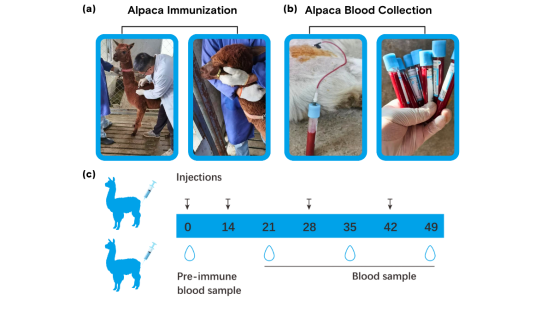
Immunized libraries can provide strong target focused enrichment when the target is immunogenic, correctly presented, and available in a form that preserves the required epitope. They are often useful for soluble proteins, extracellular domains, toxins, and other well behaved antigens. The major risk is that immunization with an incorrect antigen format can produce binders that fail against the native target.
For an immunized strategy, confirm the following steps:
- Assess target purity, aggregation, concentration, host expression system, and structural integrity.
- Select an immunization route and schedule suitable for the animal or host system.
- Monitor the immune response with an assay that uses the intended target format.
- Construct or access a library that preserves sufficient sequence diversity.
- Use decreasing antigen concentration and increasing washing stringency during enrichment.
- Screen individual clones using the native application relevant to the project.
When a naive or synthetic library is more practical
Naive libraries can be useful when animal immunization is not desirable, when the target is toxic or poorly immunogenic, or when a rapid in vitro route is preferred. Synthetic libraries can provide controlled framework design, defined diversity, and the ability to bias selection toward stability or chemical compatibility.
Choose a naive or synthetic route when:
- The target is unstable, toxic, or available only in a limited quantity.
- The project requires a fast initial screen.
- The target is highly conserved and immune tolerance may reduce useful diversity.
- The team needs a defined framework or a platform suitable for repeated campaigns.
- The discovery objective favors a particular epitope, stability profile, or chemical property.
How to compare library claims
Do not compare libraries by nominal diversity alone. Ask how diversity was measured, whether the library has been quality controlled, how many unique functional clones are normally recovered, and whether the framework is compatible with expression in the intended host. A large theoretical library is not automatically better than a smaller, well designed, high quality library.
4. Build a Step by Step Nanobody Discovery Workflow
First step: audit the target and application
Collect the target sequence, domain map, species information, known structures, ligands, homologs, expression data, and assay conditions. Identify whether the target changes conformation during purification or binding. Record the final sample type, expected concentration, matrix, temperature, pH, and exposure time.
Second step: select the antigen presentation format
Use the format that best represents the final biological target. Soluble proteins may use purified recombinant antigen. Cell surface targets may require live cells or membrane mimetics. Complexes may require co expression and purification. Use more than one format when the structural state is uncertain.
Third step: select the library and enrichment route
Choose immunized, naive, synthetic, or combined libraries based on target quality, speed, epitope requirements, and project risk. Define positive selection, negative selection, depletion, antigen concentration, wash conditions, and the number of enrichment rounds before beginning.
Fourth step: perform primary selection
Apply phage display, yeast display, ribosome display, or another suitable selection system. Begin with conditions that retain diversity, then increase stringency gradually. For membrane targets, include cell based selection and unrelated cell controls when appropriate.
Fifth step: screen individual clones
Test enriched clones using ELISA, flow cytometry, biolayer interferometry, surface plasmon resonance, or a cell based assay. Include antigen negative wells, irrelevant protein controls, parental cells, and concentration response measurements.
Sixth step: sequence and group the hits
Sequence positive clones and group them by complementarity determining region similarity, framework, target domain, and apparent binding behavior. Avoid advancing ten nearly identical clones while missing a low frequency sequence family with better developability.
Seventh step: confirm affinity and specificity
Express selected nanobodies in a consistent format and measure association and dissociation kinetics. Confirm binding to the intended target format and test cross reactivity against close homologs, unrelated proteins, host cells, and relevant matrix components.
Eighth step: test function and developability
Measure the activity required for the final application. Evaluate blocking, activation, internalization, neutralization, detection signal, or capture performance. Then test expression yield, purity, aggregation, thermal stability, freeze thaw tolerance, and storage compatibility.
Ninth step: select the lead and define the next engineering stage
Score candidates against the original acceptance criteria. Select a lead and one or more backup candidates. Decide whether the next phase should include affinity maturation, humanization or framework optimization, multimerization, linker design, conjugation, or scale up.
5. Select the Tools and Data Needed for Each Stage
Required project tools
- Target sequence database and domain annotation tools.
- Protein structure databases or structural prediction tools.
- Recombinant protein expression and purification equipment.
- Cell culture and flow cytometry capability for membrane targets.
- Phage display, yeast display, ribosome display, or equivalent selection system.
- ELISA or another plate based primary screening method.
- Biolayer interferometry or surface plasmon resonance for kinetic analysis.
- DNA sequencing and sequence clustering software.
- Size exclusion chromatography or analytical aggregation testing.
- Differential scanning fluorimetry or another thermal stability assay.
- Application specific instruments, such as microscopy, cell sorting, chromatography, or functional bioassay systems.
Minimum data package for an informed decision
- Target identity, sequence, species, and construct map.
- Antigen concentration, purity, oligomeric state, and storage conditions.
- Selection enrichment data from each round.
- Primary screening data with positive and negative controls.
- Sequence families and clone frequency.
- Binding kinetics and assay conditions.
- Specificity and cross reactivity results.
- Functional assay results in the intended biological context.
- Expression, purity, stability, and aggregation results.
6. Compare Vendors Using Technical and Commercial Criteria
Questions that reveal whether a platform fits the project
Purchasing groups need a comparison method that connects technical risk with commercial value. A vendor that offers a short timeline but limited validation may not be the lowest cost option after failed rework. Compare proposals using the same target information and request a written explanation for every recommendation.
- Does the supplier understand the target structure and final application?
- Can the supplier use multiple antigen formats if the first format performs poorly?
- Are negative selection and application relevant validation included?
- Are raw sequences, chromatograms, kinetic data, and assay protocols delivered?
- Are the promised milestones measurable and linked to acceptance criteria?
- Are failed rounds repeated under defined conditions?
- Who owns the sequences, constructs, and resulting intellectual property?
- Can the supplier support engineering, scale up, conjugation, or analytical development after discovery?
Practical scoring model for procurement
- Score target fit from one to five based on antigen and assay expertise.
- Score library and platform quality based on evidence rather than stated diversity.
- Score validation depth based on affinity, specificity, function, and developability data.
- Score project transparency based on milestones, reporting, and data ownership.
- Score total cost by including redesign, repeat screening, engineering, and scale up.
- Score technical support based on communication speed and the ability to adapt the workflow.
7. Avoid the Common Mistakes That Cause Nanobody Projects to Fail
Mistake one: using a denatured antigen for a native binding goal
A nanobody selected against a denatured fragment may not bind the folded protein or live cell target. Use native like antigen formats and confirm hits in the final biological context.
Mistake two: defining success only as high affinity
High affinity does not guarantee function, specificity, expression, or stability. Include all required properties in the lead selection scorecard.
Mistake three: skipping counter selection
Without negative selection, clones may bind tags, carrier proteins, homologs, parental cells, plastic, or other components of the assay. Add relevant controls from the beginning.
Mistake four: selecting only the strongest primary signal
Primary signal can reflect avidity, nonspecific adsorption, expression level, or assay artifacts. Confirm candidates with purified material, kinetic analysis, dilution series, and orthogonal assays.
Mistake five: ignoring target heterogeneity
Aggregation, degradation, incorrect glycosylation, and mixed oligomeric states can drive selection toward unintended species. Characterize the antigen and monitor its quality during the campaign.
Mistake six: failing to plan the final format
A clone that works as a monomer may behave differently after fusion, multimerization, labeling, or immobilization. Test the intended format early enough to avoid late stage surprises.
Mistake seven: accepting an unclear service proposal
Vague statements such as high quality hits or fast delivery do not define a successful project. Require written deliverables, assay methods, acceptance criteria, ownership terms, and contingency plans.
8. Use a Target Specific Decision Framework Before Ordering
Five minute project decision checklist
- Write the target class and native biological form.
- State the final use case and the required nanobody format.
- List the closest homologs and all required counter targets.
- Choose the antigen presentation format that best preserves the desired epitope.
- Select an immunized, naive, synthetic, or hybrid library according to risk and timeline.
- Define the primary assay, orthogonal assay, functional assay, and developability tests.
- Set objective criteria for hit advancement and project completion.
- Request a proposal that separates discovery, validation, engineering, and scale up costs.
How to decide whether the project is ready
The project is ready when the target form, application, antigen format, success criteria, control set, ownership terms, and required deliverables are agreed by research, quality, regulatory, and purchasing stakeholders. If any of these items remains unclear, resolve it before library selection or immunization begins.
The best nanobody discovery strategy is not the one with the largest library or the shortest advertised timeline. It is the strategy that matches target biology with a suitable antigen, selection system, screening plan, and validation package. By using the target specific framework above, teams can reduce rework, compare suppliers fairly, and build a more predictable path from discovery to application. 阿帕克 can support this decision process through a Custom Nanobody Discovery Platform designed to adapt antigen presentation, library selection, screening, and lead validation to the target and final use case.



 Yeast Display VHH Discovery Service
 Immunogen Design & Production
 Premade Library Screening
 Phage Display Nanobody Discovery Service
 Animal Immunization
 Yeast Display Peptide Library Screening

 Nanobody Discovery for ADC
 Nanobody Discovery for Membrane Targets
 Nanobody Discovery for Cell Therapy
 TCR-Mimic Nanobody Discovery


 Antibody Affinity Maturation Service
 Nanobody Humanization Service